Sustainable tourism is redefining modern travel through green luxury, sustainable hospitality, and responsible tourist behaviour.
Estonia is home to one of the most advanced frontiers in digitisation and digital technologies, with numerous tech solutions, such as Skype, sweeping the global market. The Estonian government places great emphasis on cultivating tech talent by integrating programming as one of the essential skills in their primary school curriculum over a decade ago, and encourages students to embark on entrepreneurship.
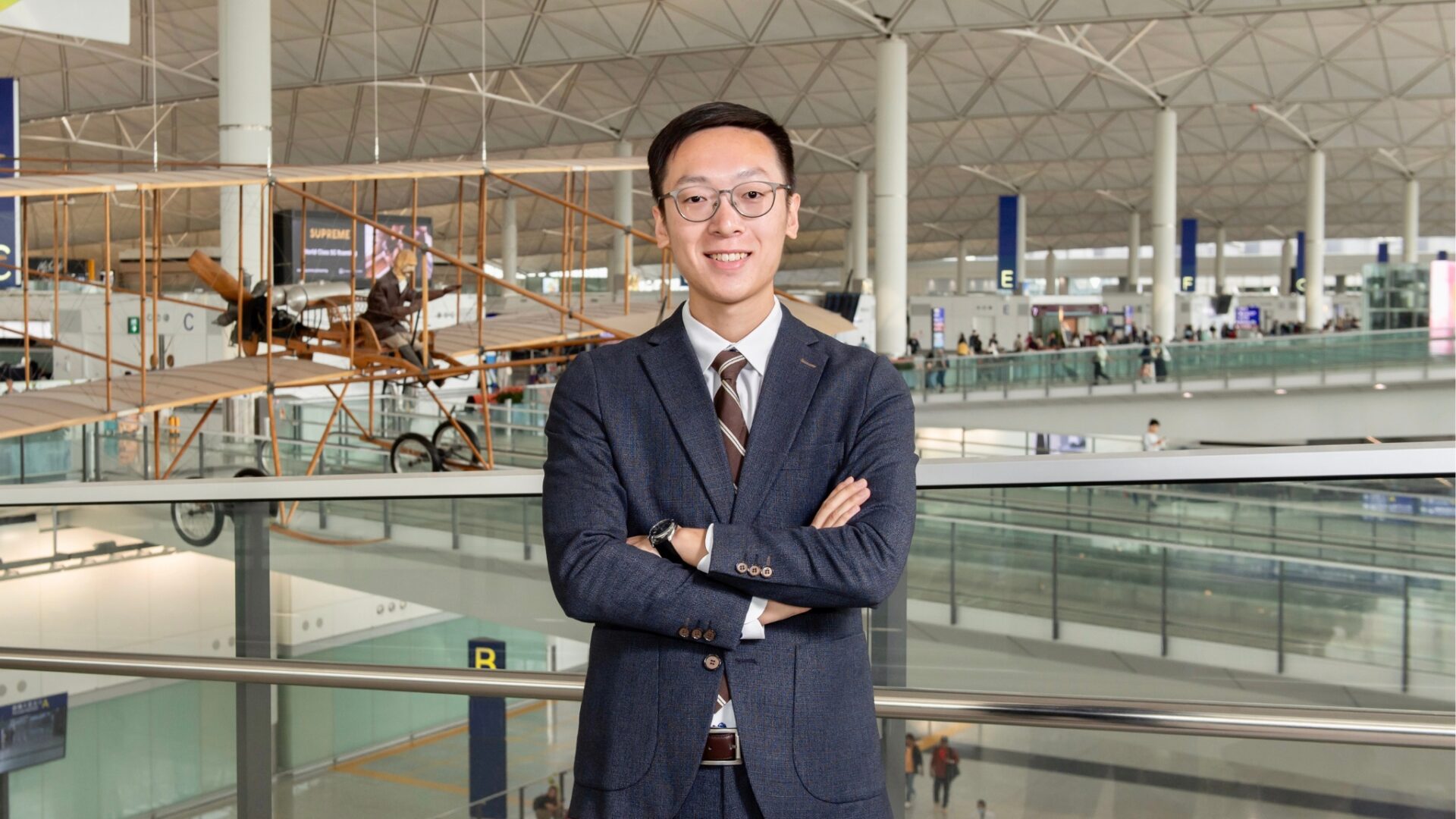
“Many of life’s defining moments — whether it is studying abroad, working overseas, or visiting family and friends on the other side of the world — are inextricably linked to airports. Air travel allows us to transcend borders and time zones, connecting people, relationships, and experiences.” For Addes Mak Ho-yeung (IBCE 2022), whose passion for aviation runs deep, the industry has not only created countless extraordinary experiences but also fuelled socio-economic growth.
The recent launch of DeepSeek’s open-source AI models, alongside other democratised AI tools, has intrigued, inspired and energised the world. Businesses can now leverage powerful AI to enhance productivity without requiring substantial infrastructure investments or expensive licensing fees. Likewise, individuals can augment their expertise at little to no cost. The potential impact of AI on business performance is profound – even before DeepSeek’s release, Accenture reported that organisations embracing AI-led processes achieved 2.4 times higher productivity and 2.5 times greater revenue growth. As advanced AI becomes increasingly accessible, this trend is set to accelerate.
The advent of AI is rapidly changing the global social-economic landscape. As we eagerly await the next breakthroughs to be presented by AI agents, physical AI and more, one-third of the global population are still waiting to be connected online. According to United Nations, out of the top 100 high-performance computing (HPC) clusters in the world capable of training large AI models, none is hosted in a developing country. In a world polarised by economic and technological divides, will the deployment of AI exacerbate inequality and poverty?
AI is being rapidly adopted across various sectors and industries across the globe. From Hollywood scriptwriters to software engineers in Silicon Valley, many express concerns about job displacement as machines replace humans. In China, a PwC study predicted that 21 per cent of the existing jobs in the service sector could be displaced by 2038.
Generative AI shook the world and became the centre of global debates when ChatGPT was launched in late 2022. It excited the business sector with its potential to substantially automate work, boost efficiency, speed up the development of new medical devices, and add US$13 trillion to the global economy by 2030, among countless other wonders. …
From analysing data to nurturing real estate talent, Dr Ervi Liusman has transformed from a classroom beginner to a beloved educator as well as the recipient of the Vice-Chancellor’s Exemplary Teaching Award 2022. Her success springs from empathy, innovation and a vision for cultivating adaptable, sophisticated leaders who are ready for tomorrow’s world.
Asia’s forward-thinking students are converging on Hong Kong and the Chinese University of Hong Kong (CUHK) Business School to launch their careers and give wings to their dreams. By immersing in an environment that celebrates personal growth, cultivates future-ready skills and nurtures a global perspective, these aspiring changemakers are driven by a desire to forge their own paths in business while also contributing meaningfully to societies – across Hong Kong, their native lands and on the global stage.
The global development is shining a bright spotlight on the Asia Pacific region, attracting businesses and talent worldwide. Postgraduate students from diverse backgrounds are choosing The Chinese University of Hong Kong (CUHK) Business School to gain insights into both Chinese and global business systems, sharpen practical skills and foster strategic connections. They are leveraging the school’s renowned reputation for elite business education and Hong Kong’s unique position as an international financial hub—optimally located at the doorstep of mainland China and the Greater Bay Area (GBA)—to catapult their careers and achieve their ambitions.
Melting glaciers, mass extinctions, increasingly frequent extreme weather events… For decades, environmental campaigns have relied on catastrophic images and stark warnings to raise public awareness of climate change. However, experience has shown that overemphasising “doomsday scenarios” often leaves people feeling powerless, numb or even resentful, ultimately backfiring. Therefore, to inspire proactive response to climate change, we urgently need to reframe our narrative of environmental action.
As sustainability gains importance globally, “corporate governance” has become a major focus in the business sector, forming one of the three pillars of ESG (Environmental, Social, and Governance). Traditionally centred on internal controls and management systems, corporate governance now encompasses the interests of various stakeholders and serves as a crucial metric of a company’s sustainability efforts. Beyond fulfilling environmental standards and honouring audit obligations, how can future businesses innovate in corporate governance and enhance sustainability, achieving triple-win outcomes for the business, the environment and society?
Financial Times Executive MBA Ranking 2025